
The World Is Forever Ending
On resilience, craft, and bullet holes.

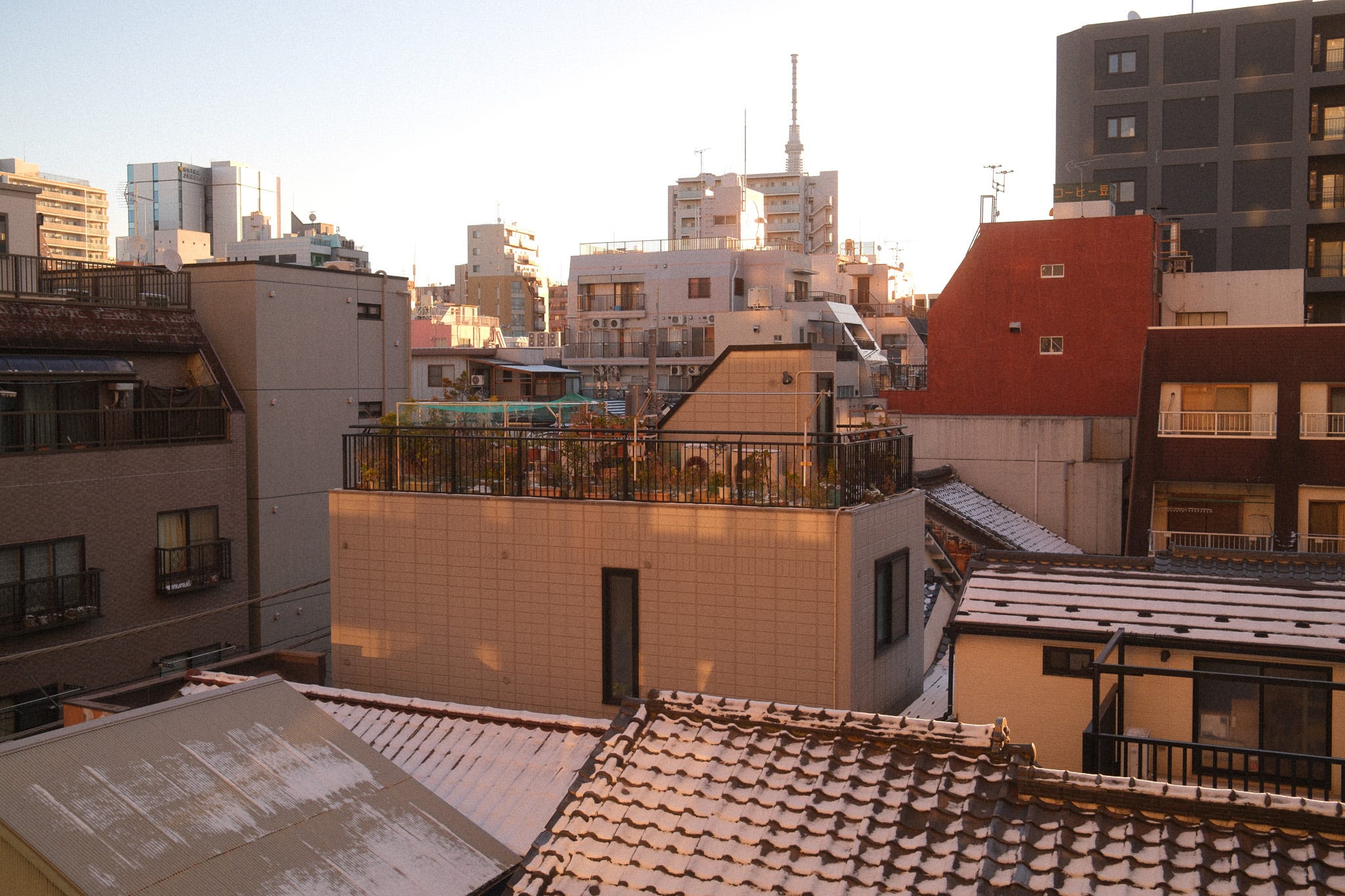
It’s a Sunday morning in Tokyo and I’m making tea, watching snow slowly pile up on the rooftops from my apartment window.
The scene is peaceful, quiet.
* * *
Two days ago, the headline of the New York Times read:
Nuclear Arms Control Era Comes to End Amid Global Rush for New Weapons.
* * *
If I were to put a character in this setting, I’d have them think about Valentines Day, maybe. It’s coming up soon. Or about how they love winter, or how time piles up like snowflakes, if we’re being poetic.
But what I’m actually thinking is: there seems to be a lot of despair in the air these days.
Yesterday, I met up with a group of people in Daikanyama who I’m hoping will become new friends. I’ve been going through the motions of making friends over and over these days, since I moved to the city without knowing anyone. It can be nerve-wracking meeting new people, but the conversations among foreigners here seem to fall into well-worn grooves, smoothing away the anxiety: so how long have you been in Japan? What neighborhood are you in? What’s your experience been with the jobs/the visas/the language?
But this particular conversation stood out because there was a distinct current of unease threading through it. Not with each other, but with the world that we’re currently occupying.
Sometimes overt, sometimes subtle, the questions bubbled up:
So… what do you think about AI? How’s it impacting your industry? Is there meaning to our work if robots can do it too?
What do you think of the order of the world these days? Do you think there will be war? Will humanity be okay? Will we be okay?
And if we are okay, will there be any meaning or purpose left when this is over?
These are questions I’ve discussed with friends and family back home, over the last several months. They come up in a way that feels inexorable, inevitable. But what’s interesting to me about the conversation in Daikanyama is that it happened with strangers. The off-ness of the world has reached enough of a fever pitch that we’re bringing it up with people we’ve never met before, looking for answers wherever we can find them.
The feeling that we’re standing on the edge of a precipice is undeniable.
And yet… I look out at the snow, then over at my camera. Grab my coat. The world might be ending, but the snow demands to be witnessed.
* * *
The New York Times again, this time in the Opinion section:
What If Labor Becomes Unnecessary?
* * *
I’ve had a hard time getting worked up about the news lately. Don’t get me wrong, I used to wring my hands along with the best of them. Yet somewhere in and amongst the constant coverage of very real disasters — economic, societal, political, technological, geographical — a little voice in my mind finally piped up and said: well, yes, the world will change whether we want it to or not.
We were never promised a peaceful world to live in.
Japan, as a country, knows this better than most. The issue I find with growing up in North America is that, as a young country, we lack a certain historical context. Lack a sense that we’re citizens of history, that there’s a story being told which is bigger than any particular moment we happen to be living through.
Which is why, with the snow coming down, I head to Yanaka. I want context, and they’ve got it. Or, more specifically: they’ve got bullet holes.
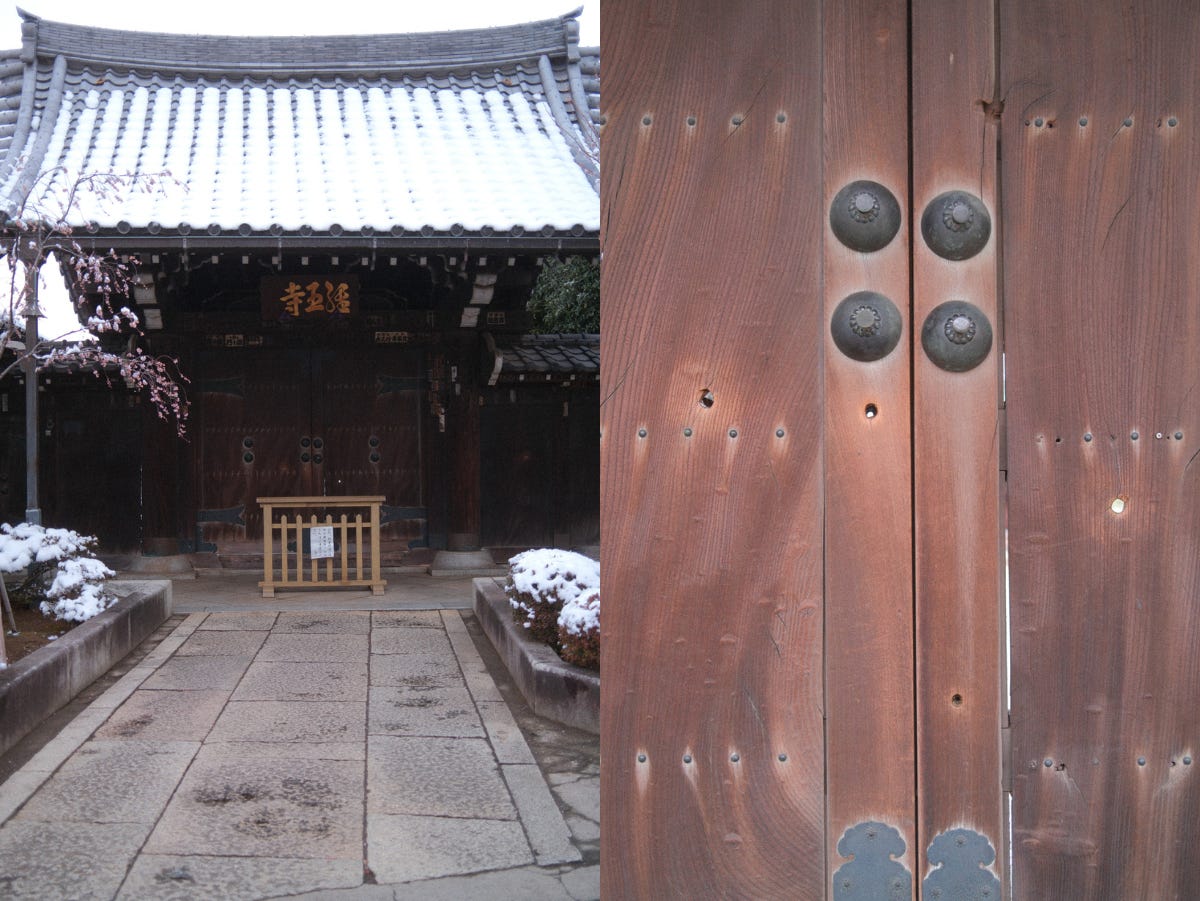
Kyooji Temple has been around since 1655, or roughly four centuries. And when I pause to do the math, I realize that it has the United States beat by a hundred and twenty years. It’s withstood multiple fires, earthquakes, wars — escaped the ubiquitous firebombing of WWII thanks to an administrative blip — and took its bullets during a civil war that cleared the way for the Meiji Restoration of the 1860s.
I go up to the gates and stick my finger into each of the holes in turn, my mind snagging on the fact that enough people have done this over the years that the inside of each hole is worn smooth. I knew this would be the case: guidebooks and articles I’ve read have said as much. But actually standing here, it occurs to me how the wood would have splintered, would have been rough, right in the aftermath of the gunshot.
How many fingers does it take to really smooth that away? Did some temple priest finally get tired of people getting splinters and just take some sandpaper to it? Or is this just… time?
I step back from the gates and look around. The civil war that caused these marks isn’t the sort of thing I was ever taught about in school, but when I looked it up, a bloodless note on a Wikipedia page informed me that over a thousand homes were destroyed in the battle. You wouldn’t know it now.
I walk away from Kyooji thinking about how I wouldn’t even be able to find evidence of that battle, if the temple hadn’t decided to keep the doors. Tokyo is good at this: at adapting, at changing, at covering over its scars. Life goes on, the city seems to say.
* * *
A few days ago, our school gathered for an information session on what to do in case of a natural disaster.
“Japan no longer uses the word ‘unprecedented’ after the 2011 Earthquake,” the presenter claimed. “Now we simply assume that every earthquake could end the world as we know it.”
* * *
We’ve been predicting the end of the world for a long, long time. I’d go so far as to say it’s a time-honored tradition at this point. We have a tablet from the Assyrians predicting imminent doom back in 2800 BCE. Early Christians were so certain of the Second Coming that Paul expected the world to end in his lifetime. The Middle Ages had a few waves of apocalyptic fervor to its name: starting in 1000 CE (because big numbers are simply not allowed, as Y2K can also attest to), and then again coinciding with the Black Death and the Little Ice Age. The Millerites placed their bet on 1844 for whatever reason, leading to the “Great Disappointment” when the day came and went and the four horsemen of the apocalypse were nowhere to be found. And in the modern day, the Doomsday Clock inches ever closer to midnight.
Yet I can’t help but think, as I head towards the back streets of Yanaka, that either the world has ended a thousand times and we never stopped to notice… or that our expectation the world will end with our own suffering is actually one of our greatest forms of hubris.
Can we truly claim that our plight is unique, amongst the thousands of years of history in which we stand? When empires have risen and fallen, when cities have burned and been rebuilt, when plagues have come and gone…
I don’t think we can.
* * *
The snow is stopping, but I pause on my way to take pictures of where it’s accumulated on roofs, in bike baskets, on flower pots. I’m nominally in search of a tree that I heard is around here — a Himalayan Cedar — but I’m really just taking the chance to bask in Tokyo in the snow. Snow is fairly rare here, so I pause every few minutes to snap a picture of it.
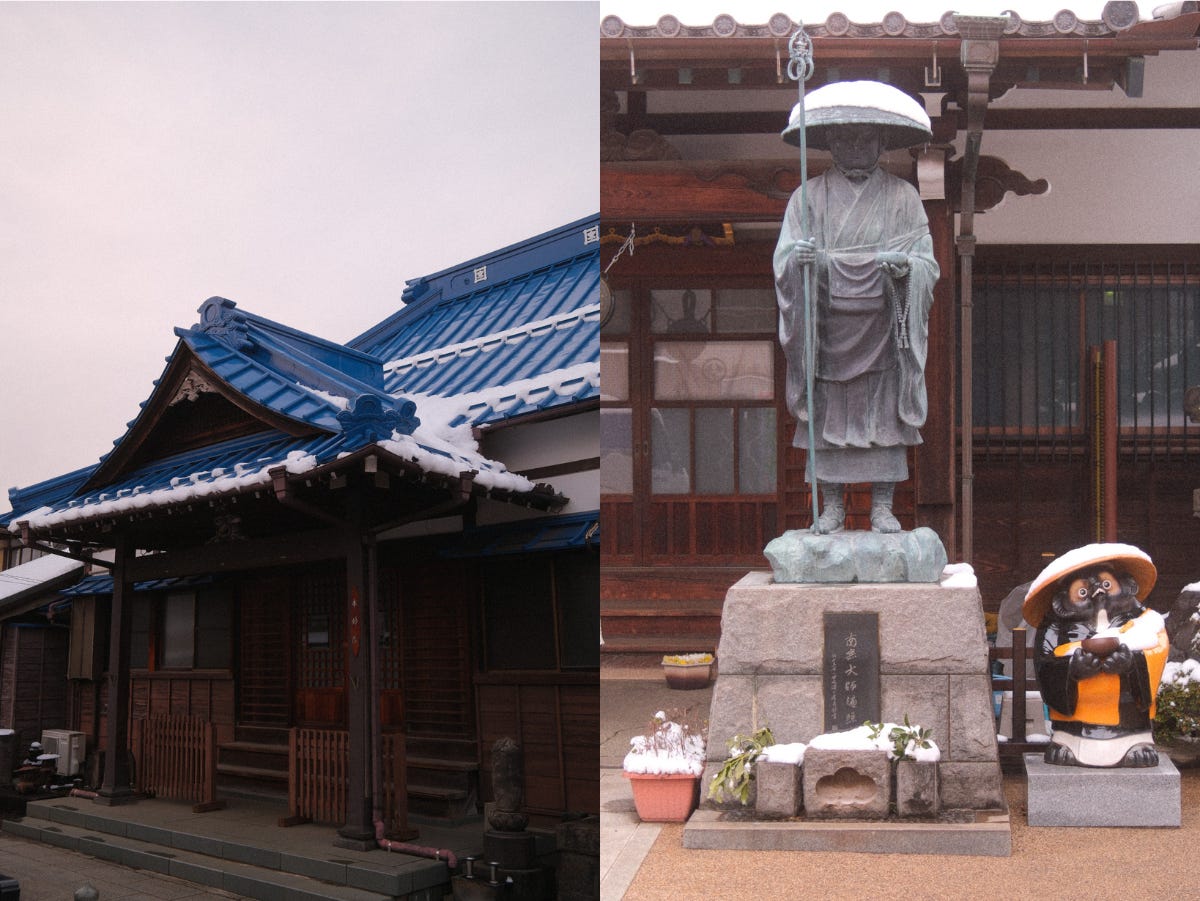
When people say “Tokyo,” they tend to think of Shibuya Crossing, of the bars of Golden Gai, or of the beeping, flashing wonders of Akihabara. They don’t tend to think it’s quiet. But it is quiet here, among the temples. Hardly a single sound to be found, aside from my footsteps and the occasional whoosh of a bicycle going past. And the snow and the quiet together remind me of a different time that the world felt like it was ending.
On my laptop, in a file that serves as an ad-hoc journal, is an entry from March 2020:
Although it’s spring, I keep expecting it to be winter when I look outside. I want there to be snow piling up on the windowsills, blocking the doorways, covering the roads. A manifestation of the stillness that coats the spaces beyond our homes.
The outside world that we crafted with such care stands empty, as if each of us has been whisked from it and placed into our own little snow globe ornaments. Six feet of space inside each self-distancing bubble, with a personal snowstorm for each.
And so we stand frozen, like figurines, our eyes tracking the tiny snowflakes as they drift through the silence.
Waiting.
If I could go back to that girl from six years ago, I’m not sure she’d believe what’s happened since. That the entire world did freeze, for a moment, but then rapidly thawed. That she’d simply need to wait inside for a couple of years, and then she’d be able to get on a plane and fly halfway around the world. Not even wear a mask, most days.
This is the trick the mind plays: that now will be forever.
Yet having lived through that once, I can’t help but feel a certain impatience now, when I look at the news or talk to people about where the world is going. “What will we do?” they all seem to ask. “Look at the economy, look at the politics, look-”
I have to bite back the words I actually want to say:
This despair is not interesting to me.
* * *
I have a distinct memory from my brother’s funeral. A woman came up to my mom and said “I don’t know how you do it. I could never.”
It’s strange looking back, because the emotion I remember from that moment was fury. Not the kind of thing you usually attribute to a six year old. Yet it was a common sentiment, expressed towards both me and my parents, during those first few years after his death. Every time, it made me mad.
Recently, my closest friend from college and I were talking. Her mother was diagnosed with cancer about a year ago, and my friend is her sole caretaker. She mentioned that people have been saying the same thing to her recently.
“What they don’t understand is that they could. If they had to,” she said over the phone, her voice laced with a grief and, yes, fury, that felt deeply familiar to me.
All I desperately wanted to do, in that moment, was give her a hug.
* * *
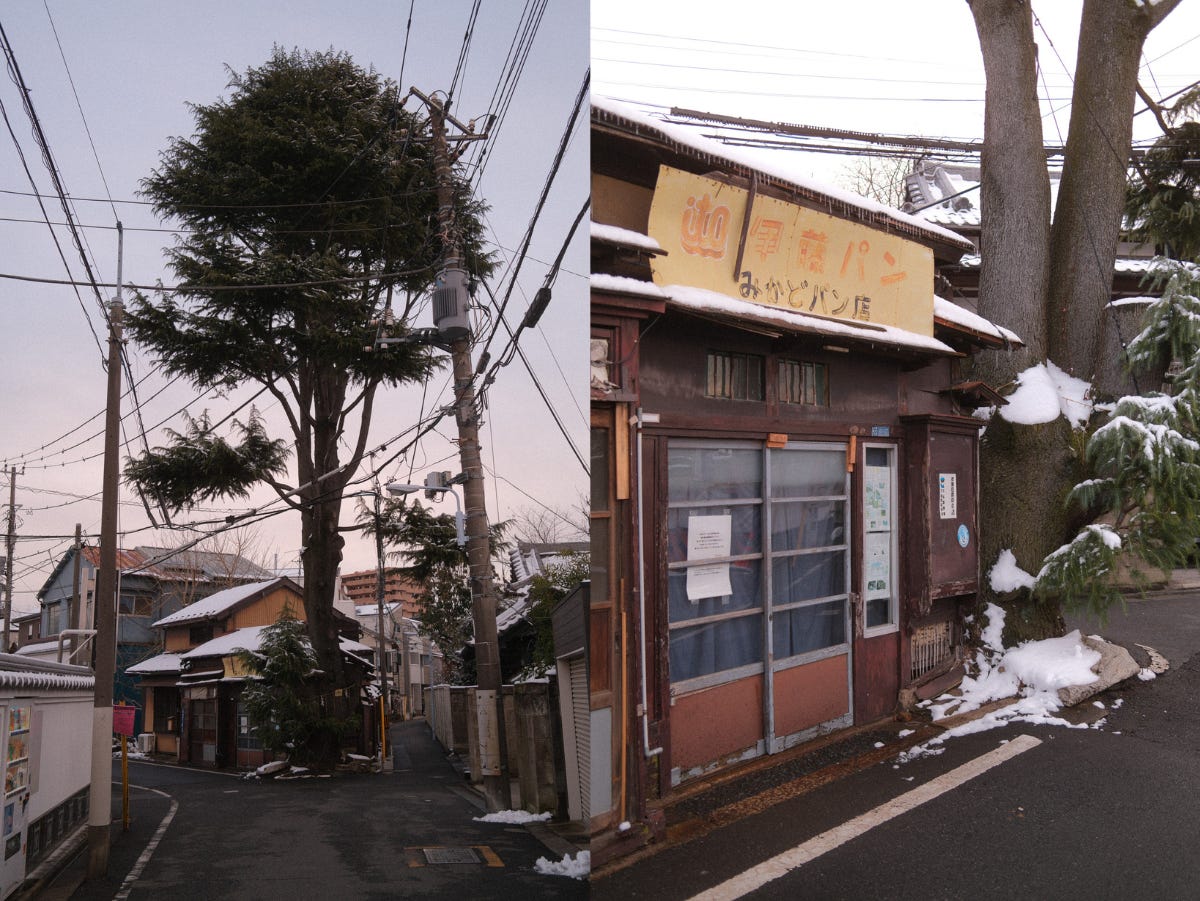
I’m standing in front of the cedar tree I was looking for when I realize that those memories lie at the crux of the frustration I’ve been feeling towards all these conversations of impending doom.
Because here’s the thing: saying that we can’t, that we are quite simply incapable of meeting the moment, has never stopped a single bad thing from happening. The moment will come whether we’re ready for it or not. So how do we learn to trust ourselves, to generate the self-belief that we can meet difficult moments, so that we actually do feel ready?
The cold reality is that this belief is most often found in crucibles. By losing loved ones. By letting go of dreams. By surviving health scares. By living through war. When the things that we thought we needed to be happy are taken from us, when we survive things that we thought were unsurvivable — that is when we discover the true strength of our internal resources.
Our faith in ourselves is not blind, but based on evidence: we’ve gotten through hard things before, and we’ll get through hard things again.
So when I check in with myself to find answers to the questions that are urgently swirling around right now (What if the world ends? What if every professional skill I possess is rendered useless? What if war breaks out? What if the rules of society are rewritten?), all I find at the bottom of my soul is a somewhat tired, somewhat exasperated, but nevertheless adamant voice that insists:
I will fucking figure it out.
Why? Because I have before. This is the foundation upon which my belief is based — not only in myself, but in humanity at large.
* * *
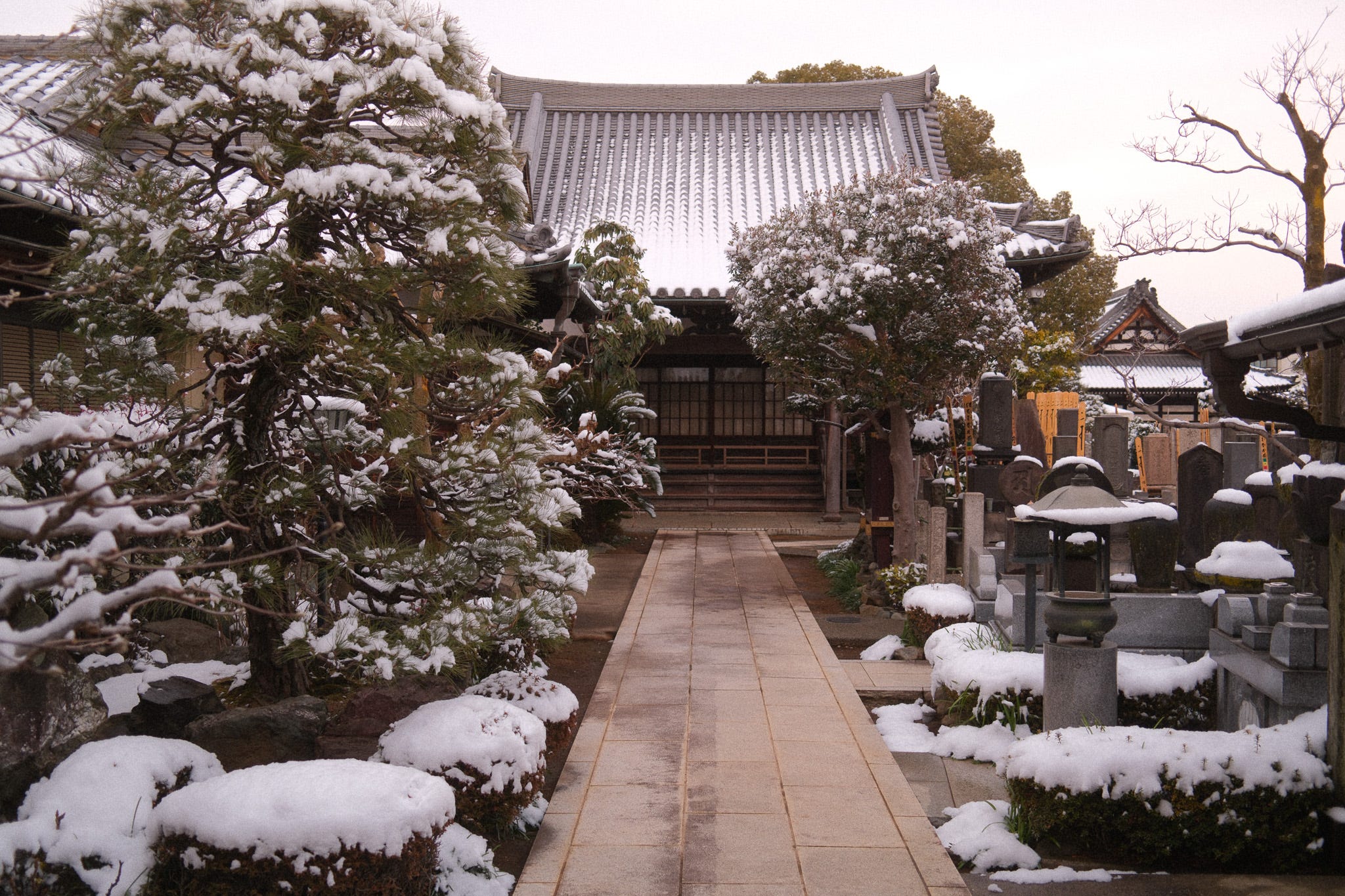
A lot of the temples in Yanaka have graveyards attached, and I end up walking along a few of them, thinking about how it would be nice if we could call up a counsel of ghosts and ask: how did you live through such upheaval? We’re not the first people in history to have experienced a moment like this. In fact, to some of these ghosts I’m walking among, the present would probably look deeply familiar.
When the Industrial Revolution happened, many people’s trades were made obsolete in rapid succession. The weavers, the dyers, the millers, the fullers, the rope/candle/barrel-makers — suddenly swept up in the tide of history.
In Japan, the upheaval was even more abrupt. The battle that left bullet holes in the doors of Kyooji was pivotal in deposing the last of the Tokugawa Shogunate, leading to the Meiji Restoration and ending Japan’s self-imposed exile from the world. When they first re-opened the country, they had almost a hundred and twenty years of technological advancements to catch up on. We like to think of Japan as a country that holds onto its history, but they speed-ran the Industrial Revolution with a vengeance, taking only forty years — a third of the time it took in the West — to fully modernize their society.
This is most often told as a tale of triumph. But to the samurai, the indigo dyers, the sword makers and others, it must have felt the same as it does for many of us today. I can easily imagine them standing in front of me and saying: we never asked for this.
No. They never did. We never do.
Yet here we are.
The weavers of wool for British clothes and the weavers of silk for Japanese kimono both must have felt that weaving was their vocation. That weaving cloth well, with intention, was a worthwhile effort and expression of their craft.
This, incidentally, is how I feel about writing. Even if AI can write for me, I take pleasure in a job well done. In crafting the sentences myself, working to capture the cadence and feeling of my thoughts. I like struggling with the musical notation of punctuation, deliberating between words, fussing over the shapes of paragraphs. Yet in the same way that those pre-Industrial Revolution weavers were the last generation to take up their craft out of earnest necessity, I may be part of the last generation of writers.
Why write, or weave, if a machine can do it for you? The comparison isn’t perfect, but it’s closer than it appears at first glance. Some weaving was purely utilitarian, while other weaving was a form of artistic expression. This is also true of writing. I’m not going to stand here and tell you that I weep for the craft of writing an email, and neither, I suspect, is anyone else. But some writing deals in the human soul, in the conveyance of an inner world that can’t be brought to light any other way. This is the art of writing. This is what I hope remains.
Yet the reality stands: writing is no longer as necessary as it once was.
It never will be again.
Is this something to lament? Perhaps. And yet if the writers, the coders, the translators and lawyers all fade from memory… well, many crafts over many centuries have risen and fallen. I hold great certainty in my heart that there was a man or woman in ancient Egypt who took pride in their ability to make papyrus scrolls. Who toiled over it the same way I’m toiling over these words. And in the way of the Middle Kingdom, they must have believed that the world would go on needing papyrus until the end of time. The same is true of cartwrights, thatchers, fletchers, bookbinders… and many more.
Necessity is inextricably linked to craft. Value, respect, self-worth all stem from this: from contributing something that society needs. And it’s a simple fact that what society needs changes over time.
But what’s interesting to me is that as our crafts have changed, humanity hasn’t lost what is most essential to us. Our care, our attention to beauty, to the dignity and satisfaction of a job well done, to the ways we can contribute to the well-being of our loved ones and communities, have all remained intact. And so I feel confident that these will remain, even if the crafts we use to express them change.
We’re just… in the process of figuring it out.
* * *
It’s not that I have any particularly great faith in governments, if we’re being honest. I retain some hope that we’ll pass legislation that’s kind, that’s sensible, that steers us down a path that opens up more space for opportunity and goodness in the world. It could happen. There are some incredibly smart people coming up with policies like that right now, and maybe by some miracle they’ll get them passed.
But history would suggest that governments are rather bad at responding to crises like the ones we’re facing now. They may see the iceberg, but they’re unlikely to do anything about it until the ship is sinking.
So I’m not sure that I have faith in our institutions to get us through this period with any kind of grace.
But here’s what I do have faith in: you.
You are stronger than you think. When your back is against the wall, and you have to survive something that you think is unsurvivable, I have faith that you will get through it — and not only will you get through it, but you’ll emerge on the other side with gifts that you didn’t have coming in. That is how crucibles work.
Would I give back every gift I have, every bit of knowledge that I possess about grief and love and perseverance, if it meant that I could have my brother back?
Of course. In a heartbeat. But it doesn’t work that way.
The ghosts of Yanaka would tell you the same.
* * *
So what do we do in the meantime, as we watch from the shore, holding our breath as we wait for the tide of history to sweep in?
First, I know that it’s scary. Of course it’s scary. We’re waiting to see what the tide will sweep away and what will remain, and the stakes are not theoretical — they are deeply personal. These are our homes, our crafts, our families, our lives. The fact that we care about these things is not a weakness, but a testament to how much care our hearts contain. Please, continue to care about the world. I’m not arguing for apathy here.
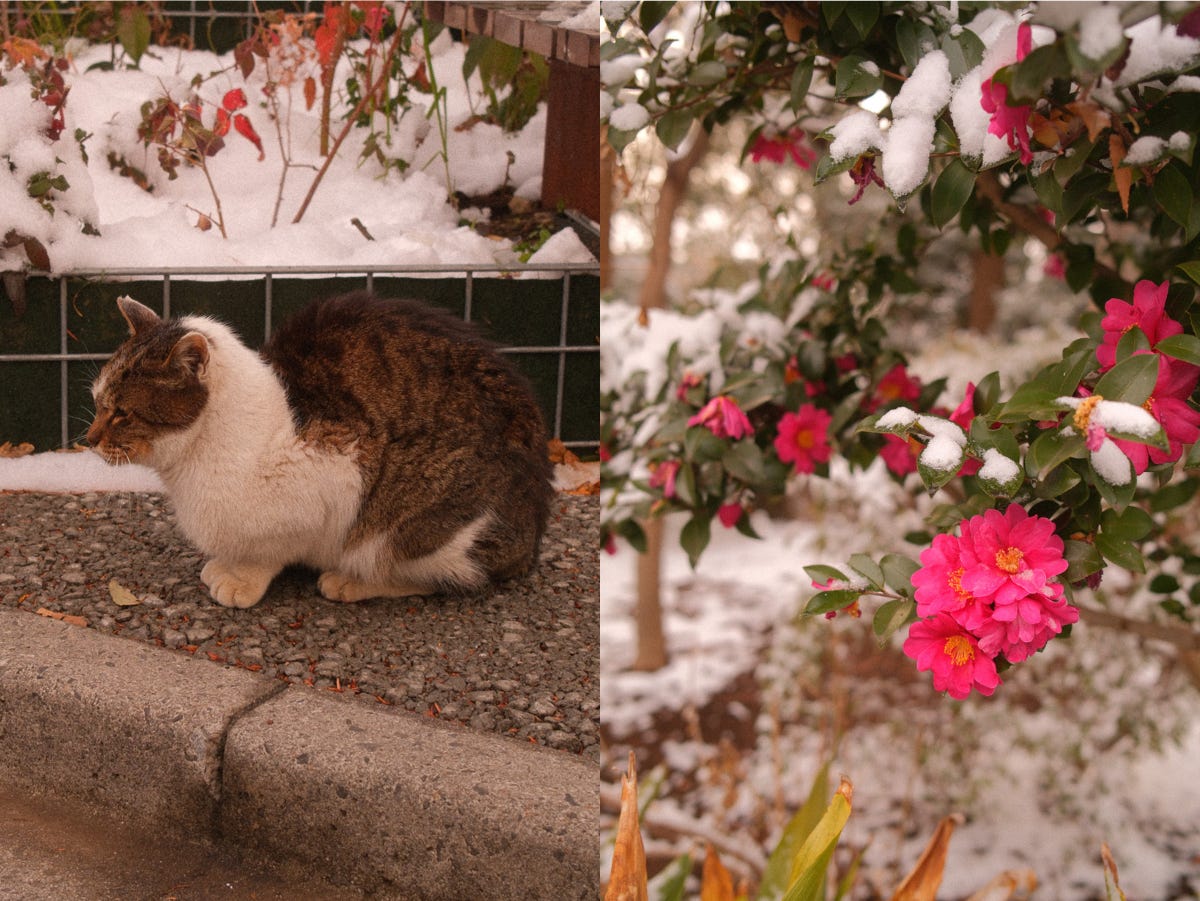
But while we’re waiting: release that breath you’ve been holding. Take the hands of those you love. Go for a walk in the snow. Stick your fingers in the bullet holes and marvel at how smooth they are.
Yes, this world might be fleeting. But while it’s here: love it with everything you have. And when it leaves, square your shoulders to meet the new world — don’t let it intimidate you. Look it straight in the eye, and remember:
You will fucking figure it out.
🫶❄️
Loved this. And found you via The Good Place. Can’t do a paid subscription right now but will try to soon.